Impression: Severance (Thru S2)
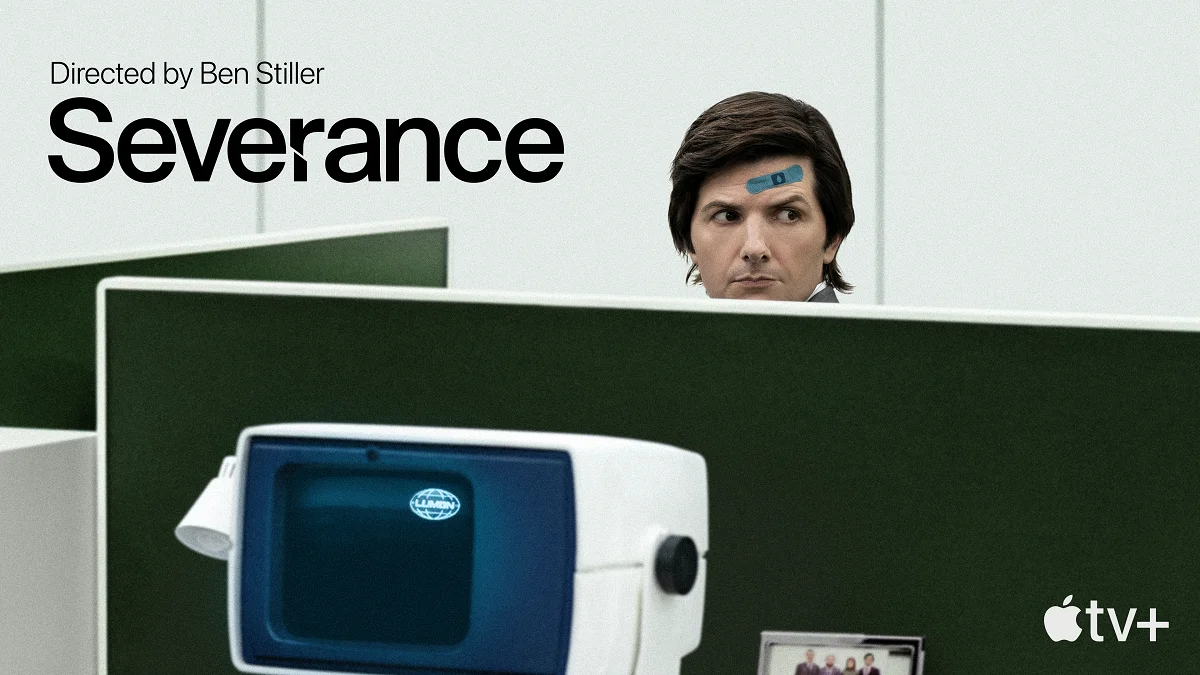
Severance Season 1 was the type of science fiction I crave, and was extraordinarily captivating. Season 2 cooled my eagerness, even though I watched it immediately after.
(Warning: spoilers ahead)
It was an interesting feeling, seeing both seasons of Severance back-to-back. The show revolves around the premise of divergent memories contained and created in one human physiology:
- Is the created persona a new person, or the same person as the original?
- Is the created persona a real person?
- What is the life experience of the created persona? Can he/she/it be happy?
- Do human rights apply to the created persona?
- Once broken, can the personas be reunited (“reintegration”)?
There are so many terrific awesome implications that could be explored. The opening premise of this show examines a split persona where the “innie” persona goes to work in order that the original persona (the “outie”) doesn’t have to experience work’s mundaneity.
The experience of binging both seasons ironically gives viewers a taste of the exprience of the split personae; season two (2025) occurred three years later than season one (2022) but to the viewer streaming the videos it is instantaneous – much like the innie’s experience coming into work each day, regardless of the time spent outside. But to its detriment, the abruptness made shifts in writing and direction that much more glaring.
Season 1: The deliciousness of good science fiction#
I have been waiting a while for good science fiction to come around. I subscribe to a relatively narrow definition of science fiction – for example, Star Wars is nearly entirely science fantasy, but Star Trek is nearly entirely science fiction. Dune is somewhere in between. The distinction to me is how much the commentary of fictional technology applies or can be applied to our own human condition, what questions it prompts about constructs we take for granted. Also whether a path can be traced, at least conceptually, from our current technology to that of the fictional future.
Severance is pure science fiction and delightfully constrains its examination to a single technology and concern – what would happen if we had the ability to partition your experiences and memories? There are so many implications ripe for examination, and the world it builds tees it up to investigate deeply. I was hooked and thought of the show in my spare moments.
I was reminded of the first few seasons of Lost (2004). Without revealing specific plot points, Lost has a deep intrigue with unseen machinations and a grander plan belied by the simple premise of survivors on an island after a plane crash. Information is dripped slowly and in our thirst we welcome the drips. I probably watched all of Lost over the span of two weeks – with Severance, the same.
The problem with being thirsty is that soon drips aren’t enough. Drips become a tease, and eventually an insult if a cup is never produced. Drips can make you go crazy. Maybe in connecting my feelings to Lost I should have also been wary of the potential that for some drips I might never get a full cup. And in this way, Severance season 2 also reminds me of Lost.
Season 2: Episodes straight from the writer’s room#
The biggest fault of the second season – to me – is that it felt made up along the way, that things written in Season 1 did not carry into Season 2, and that the events in Season 2 did not ultimately mean much.
Obviously all stories are made up, but the way I describe this is as if each episode was shot while the writers were discussing the plot of the episode in the writers’ room.
Writer A: “How long does it take for Mark to get from his car to work? What if outtie Mark took a message into the severed floor by burning a message in his retina?”
Writer B: “No, we can’t messages down because the pupils dilate briefly – ‘clean slate’”
Writer C: “What if Mark can share information by reintegrating? We set that up last season, Reghabi needs to be more present this season”
Writer D: “No it should be simpler – wait remember the birthing cabins? We strongly hinted that a mother severed herself so she wouldn’t remember the pains of childbirth, couldn’t Mark go there?
And so on. Plot points given this season were less cohesive and many didn’t drive the narrative forward – if anything, many held the narrative back.
The most important events driving the narrative forward in in Season 2 were:
- The confirmation of Gemma’s survival by several parties, specifically Reghabi and Cobel.
- The discovery of the testing floor’s location by Irving B. and the communication of that location to the innies.
- The discussion between Mark’s personae, and the acquiescence of innie Mark to aid in rescuing Gemma.
Events working to halt or delay the narrative were:
- The introduction of three new Macrodata Refiners, only to have the original cast replace them the very next episode.
- Dylan’s conjugal visits with his wife, preventing him from following through with finding Irving’s map to the testing floor. This was a worthy exploration into the life of someone married to a severed person, but it did not make much sense for her to be in this highly restricted area.
- Reghabi’s attempts at reintegration, when the birthing cabin was apparently not a mystery to the characters and a much safer and saner solution than basement brain surgery.
- A team outing into the wilderness presented with dream-like elements, making the viewer question the reality of the episode and take all events with suspicion.
- Helena Eagan invading Helly R.’s work space and sowing mistrust in her innie persona – mistrust that was ultimately shrugged off, but had the effect of stymying the teamwork of the last season.
- Cobel’s nostalgic journey to Salt Neck where it is revealed that she developed the ideas behind the severance procedure – an interesting anecdote but ultimately unnecessary and delayed the rescue of Gemma, as Devon had been trying to call her for some time. (why would Devon trust Cobel though?)
- Mark’s reintegration. We get a lovely glimpse into his past relationship with Gemma but it did not offer Mark any new perspective into the problem of saving her, and it takes him out of commission for a while.
Events that did not seem to affect the narrative and did not pay off:
- Milchick’s fabrications about the consequences of the last season’s cliffhanger.
- Ricken’s Lumon edition of his book The You You Are.
- The introduction of an eight-year-old shift supervisor, Miss Huang.
- The goats.
All this is to say, there was probably about three episodes worth of plot movement in this season, and it really didn’t even start until more than halfway through!
Unlike others I don’t take much issue with the finale; it was the events that led up to it that were more of a struggle to pass. While I have no doubts I will be watching Season 3, the latest season unfortunately took a steep dive in what motivated me so greatly to watch the first season – the delicous science fiction exploration of the world they had created.